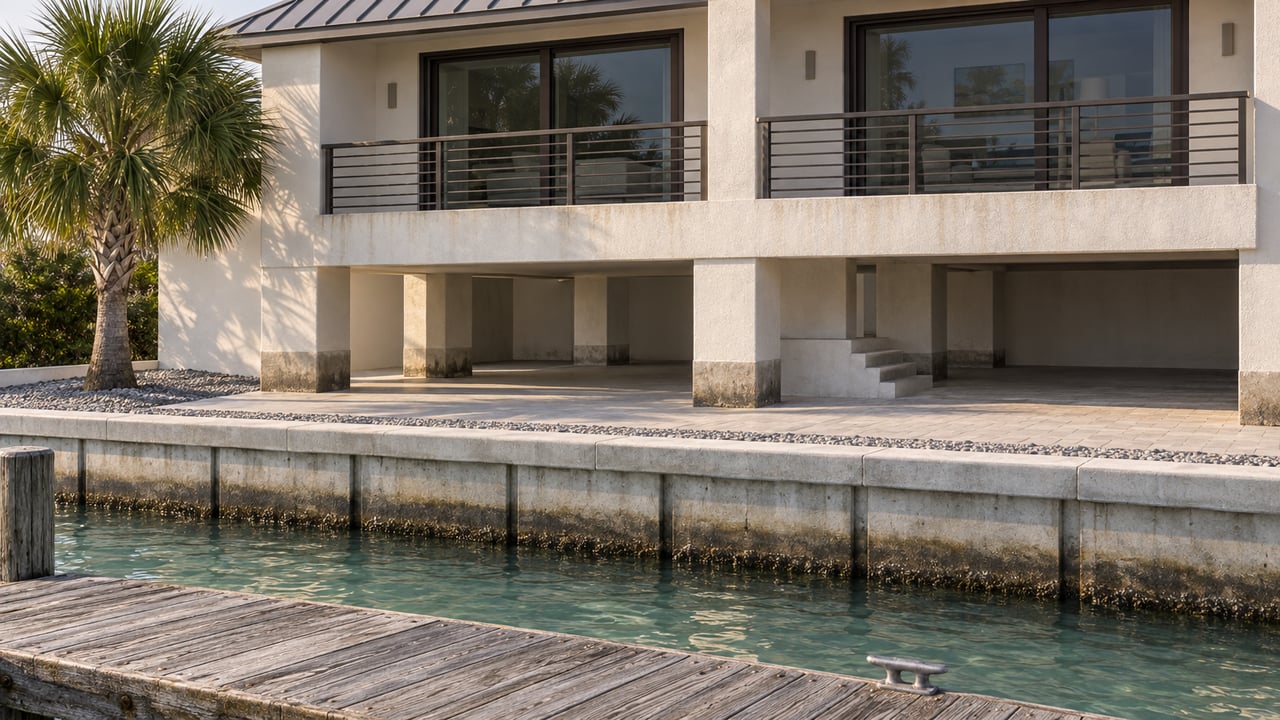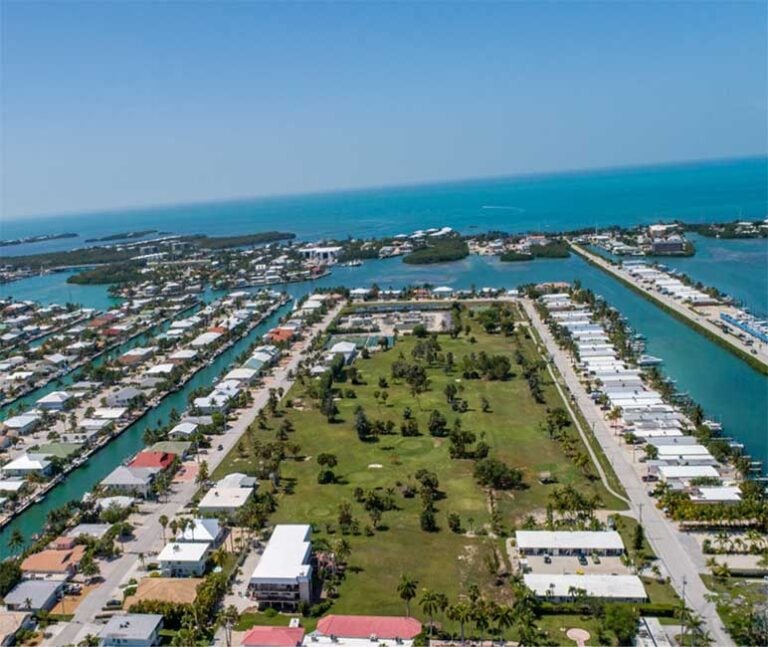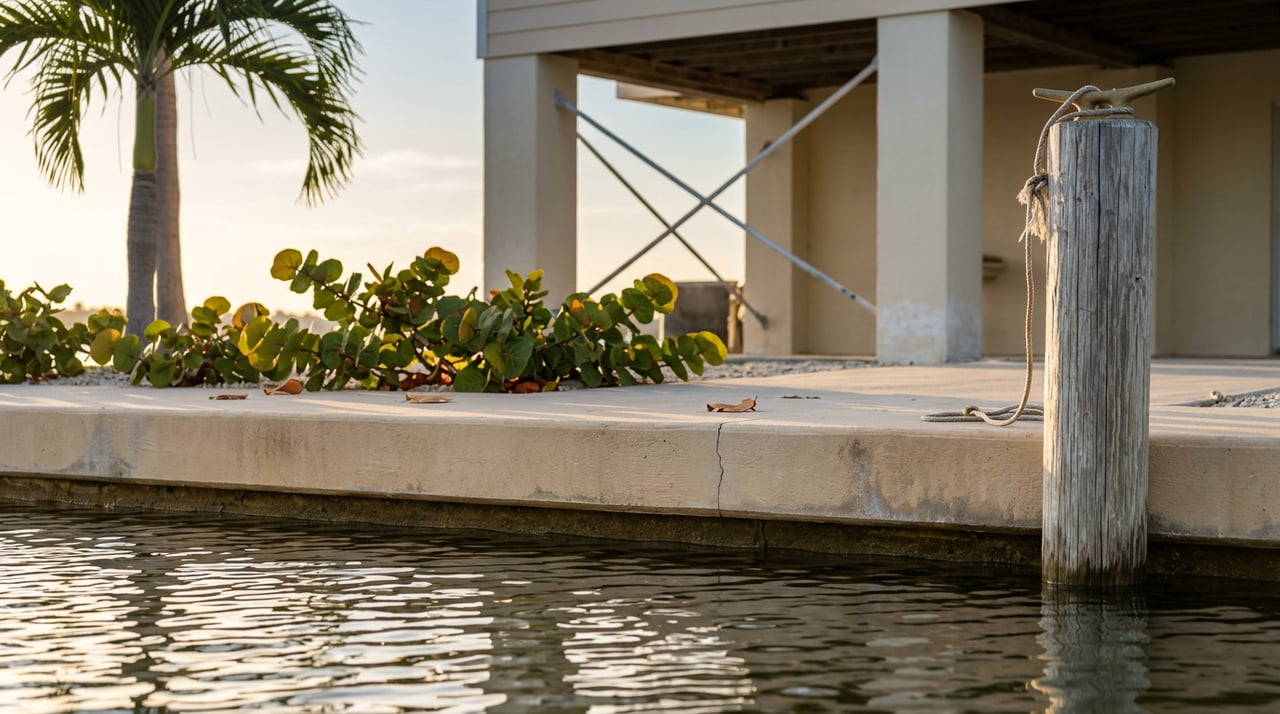
A buyer standing on a dock in Venetian Shores will usually look at three things: the water depth, the boat lift, and how far it is to Snake Creek. The seawall gets a glance, maybe a knock with a knuckle, and then everyone walks back up to admire the kitchen. Nobody climbs down at low tide to check what is happening at the toe of that wall, six inches below the surface, where the real story usually lives.
That gap in attention is not a small oversight. In Islamorada's canal neighborhoods, the seawall is frequently the single most expensive unknown in the entire transaction, and it is the one item a standard Florida home inspection does not touch.
The Inspection That Stops at the Yard
A typical home inspection in the Keys covers the roof, the HVAC system, the electrical panel, plumbing, and a wind mitigation and four-point report for insurance purposes. All of that matters here, where salt air and storm exposure accelerate wear on every system in a house. None of it says anything about the wall holding back the canal.
Seawalls and docks are a separate discipline, usually handled by a marine contractor or a licensed engineer rather than the general home inspector. Buyers in Islamorada's waterfront neighborhoods, particularly on canal-front lots in places like Venetian Shores and Port Antigua, are often making a six or seven figure decision without ever seeing a report on the one structure that determines whether the property functions the way it looks like it should.
A full waterfront due diligence list in this market typically runs longer than most buyers expect:
- Roof condition and wind mitigation
- Four-point inspection for insurance eligibility
- Flood zone designation and elevation certificate
- Seawall condition, including drainage and soil loss behind the wall
- Dock decking, pilings, and boat lift capacity
- Permit history and any open or expired permits
- Marina rights or deeded slip access, where applicable
Most of that list has nothing to do with square footage or finishes. It has to do with whether the property can be insured, financed, and used the way the listing photos suggest.
Nine Years Since Irma, and the Clock on the Patches Is Running Out
Hurricane Irma's eyewall crossed directly over the Upper Keys in September 2017, and the damage to seawalls throughout the area was severe enough that many owners chose the fastest available fix rather than a full rebuild. Emergency repairs stabilized the visible cracking and kept water out in the short term, but they did not always address what was happening underground. Seawalls that received only emergency work after Irma can carry ongoing subsurface void damage, meaning the soil behind the wall has washed out even though the wall itself looks intact from the yard.
That kind of damage does not announce itself right away. It shows up gradually, as a soft patch in the lawn, a hairline crack that widens after a hard rain, or a dock that starts to shift slightly at the pilings. Nine years is roughly the point where a patch job either holds or starts to fail for good, which means 2026 is a meaningful year for any Islamorada waterfront property that has not had its seawall looked at since the storm.
The problem compounds in specific parts of the Village. Homes near Whale Harbor Marina and along Snake Creek Pass sit in a heavier boat traffic corridor, and large sport fishing vessels moving through that channel generate wake that puts above-average stress on nearby seawalls, especially during the October through May peak season when charter and tournament traffic is at its highest. A wall that took an Irma-era patch and now sits in a high-wake zone is carrying two stress sources at once, which is exactly the kind of detail a listing description will never mention and a buyer needs to ask about directly.
When a Seawall Repair Becomes a Floodplain Project
The cost of a seawall problem is not just the repair itself. It is what the repair can trigger.
Monroe County and the Village of Islamorada apply a substantial improvement standard to waterfront construction, sometimes called the 50 percent rule. In practical terms, permits for docks, seawalls, and other over-water work can be combined with other recent improvements when the county calculates whether a property has crossed the threshold that requires full floodplain compliance. For a home sitting in an AE or VE flood zone, which describes a large share of Islamorada's canal-front inventory, crossing that threshold means an elevation certificate and potentially bringing the structure up to current elevation standards.
A property owner who plans a straightforward seawall repair can find out partway through the permitting process that the county considers the project part of a larger substantial improvement calculation. What looked like a contained, predictable expense becomes a floodplain compliance question with its own timeline and its own cost.
| What it looks like | What it can trigger |
|---|---|
| Routine seawall crack repair | Reviewed against prior permits for the same structure |
| Dock replacement after storm damage | Combined cost counted toward the 50 percent threshold |
| Repair crossing the substantial improvement line | Elevation certificate and possible compliance upgrades in AE or VE zones |
This is the kind of detail that only shows up once a permit application is already in motion, which is exactly why it belongs in the conversation before a contract is signed, not after.
The Market Has Shifted the Leverage Toward Buyers Who Ask
As of September 2026, Islamorada homes carried a median list price of roughly $2.55 million and spent a median of 134 days on the market, a pace essentially unchanged from a year earlier. That is a slow, patient market by Keys standards, and it changes who holds the leverage in a negotiation over condition items.
In a fast market, a buyer who asks for a seawall inspection risks losing the property to someone who does not ask. In a market where homes are sitting for well over four months, that risk mostly disappears. Buyers now have room to request seawall and dock documentation as a condition of moving forward, and sellers who cannot produce it are the ones losing time and leverage, not the buyers who requested it.
For sellers, this cuts the other way in a useful sense. A pre-listing seawall assessment is inexpensive relative to the price tag on these homes, and it turns an unknown into a known before a buyer's inspector finds it first. A seller who can point to a documented, sound seawall, or who has already priced around a known issue, is negotiating from a stronger position than one who is hoping nobody asks.
What This Means If You Are Buying or Selling on the Water Here
If you are buying in Venetian Shores, Port Antigua, or any of Islamorada's other canal-front neighborhoods, treat the seawall and dock as a separate line item in your due diligence, not an assumed feature of the property. Ask when it was last inspected, whether it has been touched since 2017, and whether any prior repairs were emergency work or a full rebuild. If the answer involves Irma, ask to see whatever documentation exists from that period.
If you are selling, get ahead of it. A seawall report you commission yourself costs far less than the one a buyer's inspector generates during a due diligence period, and it lets you address or price around any findings on your own timeline instead of the buyer's.
A Few Questions Buyers Often Ask
Does a standard home inspection cover the seawall? No. Seawalls and docks require a separate marine assessment, typically from a licensed marine contractor or engineer, because they involve structural components below the waterline that a general home inspector is not equipped to evaluate.
What actually triggers Monroe County's substantial improvement rule on a seawall repair? The county can combine the cost of a seawall or dock permit with other recent permitted work on the same structure. If the combined total crosses 50 percent of the structure's value, the property may need to meet current floodplain elevation standards, which can include an elevation certificate and additional compliance work.
Is it worth getting a seawall inspection before listing a canal-front home? In most cases, yes, particularly for any property that has not had one since 2017. It costs a fraction of what a surprise finding could cost in a renegotiated closing, and it gives you the option to fix or disclose on your own terms.
Waterfront property in the Middle Keys rewards buyers and sellers who understand what is happening below the surface, both literally and in the transaction itself. If you are weighing a purchase or a sale in Islamorada or anywhere else in the Middle Keys, Jennifer Hamill can walk you through exactly what to check before you write an offer or sign a listing agreement. Let's Connect.